Everything has history!
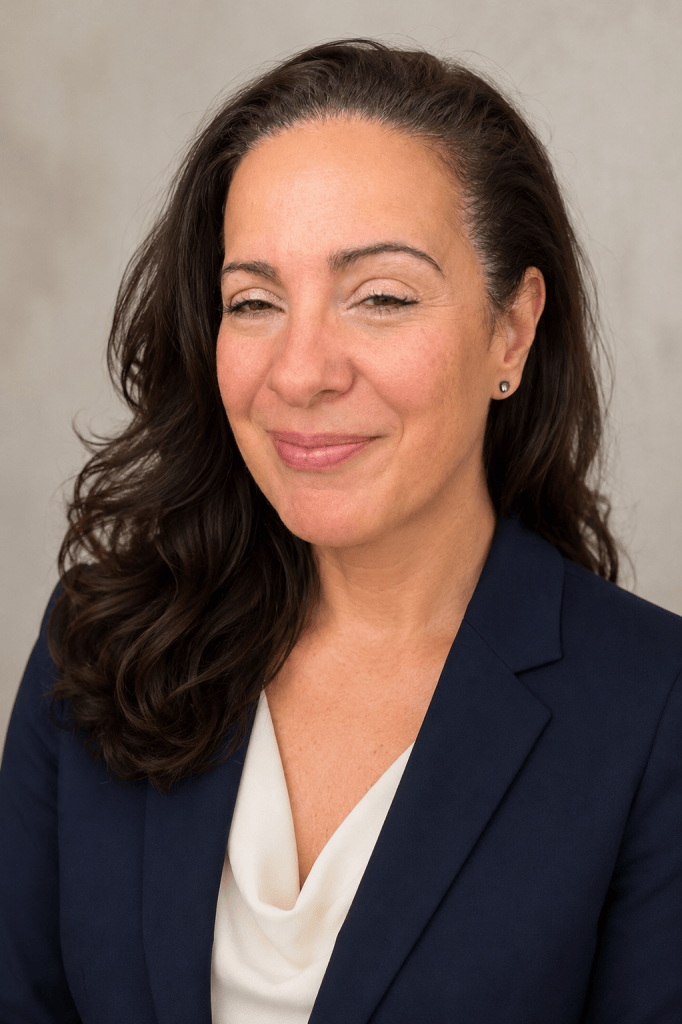
I hold a Ph.D. in History from the Pontifícia Universidade Católica de São Paulo (Brazil). Since relocating to the United States in 2007, my professional path has moved across higher education, research, program development, and institutional leadership. These experiences have taken me between Brazil and the United States and have continually brought me back to a question that remains at the center of my intellectual work: what are the enduring legacies of eugenics in contemporary society, and how have they been recast through new languages of medicine, reproduction, technology, human enhancement, and social progress?
Today, I work at the intersection of historical scholarship, higher education, and public engagement. After years of teaching and developing academic and international education programs, I founded the Terra Brasilis Institute, a nonprofit organization dedicated to connecting knowledge, people, and cultures, with a particular emphasis on strengthening intellectual and cultural bridges between Brazil and the United States. This new chapter allows me to bring together areas of my professional life that have often existed alongside one another: historical research, teaching, international collaboration, public humanities, and the creation of spaces where scholarship can circulate beyond traditional academic boundaries.
My primary fields of research and teaching are Modern Latin American History, U.S. History since 1865, and the History of Medicine and Reproductive Rights, with particular emphasis on the history of eugenics, anti-eugenics, the body, and the relationship between science, technology, and ideas about human improvement. Increasingly, my work examines eugenics not simply as a historical movement confined to the first half of the twentieth century, but as a persistent intellectual and political legacy whose assumptions continue to be reformulated in contemporary debates about reproduction, genetics, biotechnology, transhumanism, and the future of the human.
My own history inevitably informs the questions I ask. I am Brazilian, Arab, Italian, and American. Over the years, I have been described through many categories: immigrant, white, mixed, Latina, woman, mother, wife, daughter, historian, educator, researcher, and professional. Each describes something real, but none independently comes close to describing a person. I am also a gardener, a lover of dogs and cats, a traveler, a music enthusiast, an enthusiastic appreciator of good food, and an aspiring photographer.
Building an intellectual life often means negotiating time among archives, sources, writing, teaching, professional networks, institutional responsibilities, and the complex power structures of academia while simultaneously performing forms of care that remain disproportionately carried by women. Intellectual labor and care work do not occupy separate worlds; they continually intersect, compete, and reshape one another. For women of my generation, this negotiation has unfolded against institutions and cultural expectations that historically defined intellectual authority as predominantly masculine. Having come of age in the 1970s, I see that history not as an abstraction, but as part of the landscape through which my own professional and personal life has developed.
At this stage of my career, I am especially interested in building bridges: between Brazil and the United States, scholarship and public life, established researchers and emerging scholars, historical knowledge and contemporary problems, and institutions and the communities they are meant to serve. My work as a historian and educator and my leadership of the Terra Brasilis Institute are different expressions of that same commitment: connecting knowledge, people, and cultures while creating meaningful intellectual work for the generations that follow us.
Beyond all of these professional endeavors, the center of my life remains my family. My most meaningful time is spent with my husband and with my daughter, Beatriz, who has now begun building an independent life of her own. That transition, too, has opened a new chapter—one that has given me both the space and the responsibility to reconsider what I want the next stage of my intellectual and professional life to build, connect, and leave behind.

